
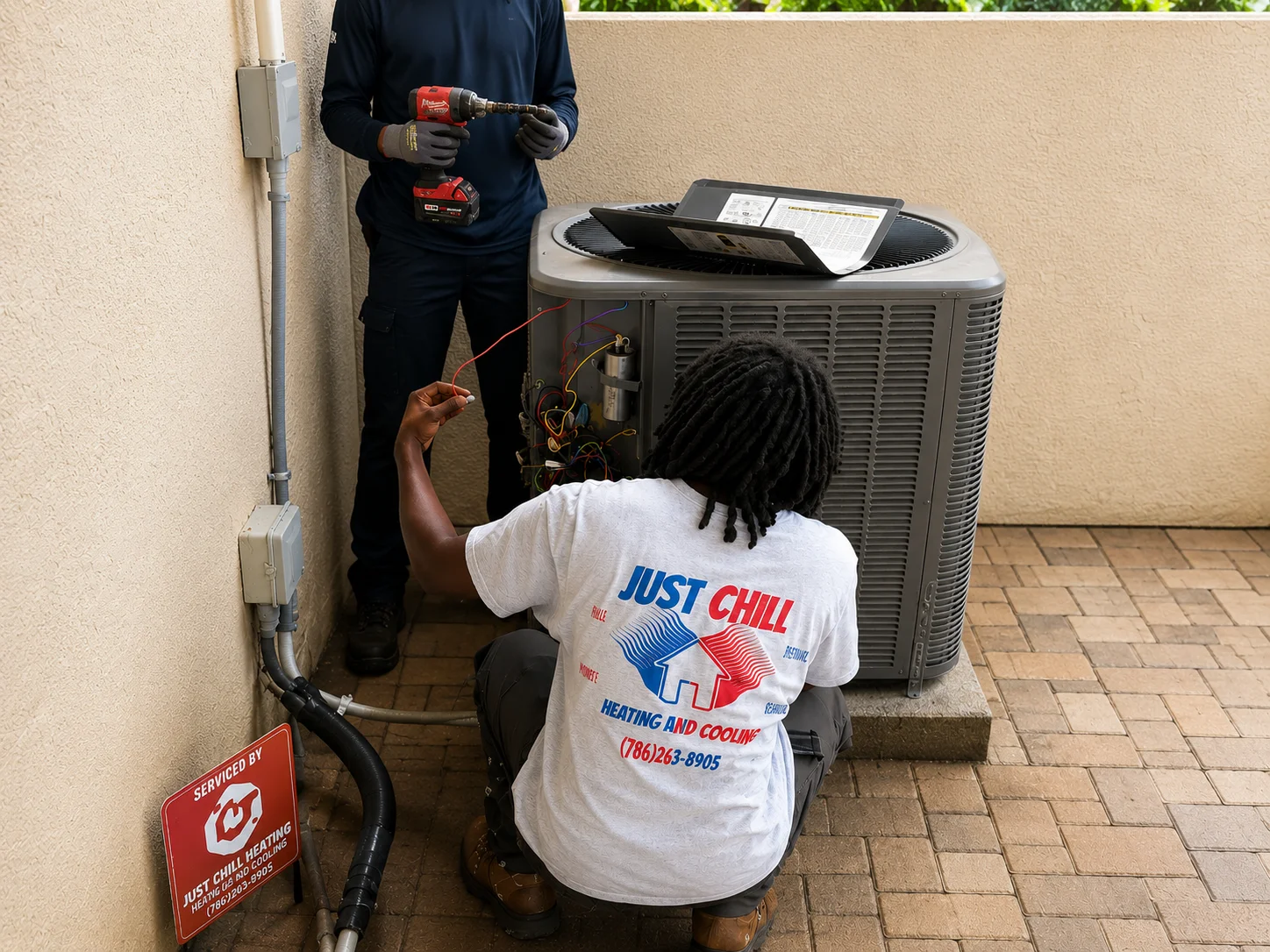
A healthy AC makes a steady hum indoors and a whoosh of air from the outdoor fan. When you start hearing new sounds — buzzing, rattling, squealing, banging — your system is usually trying to tell you something.
Where the noise comes from matters. Your indoor unit (air handler, which holds the evaporator coil and blower fan) and your outdoor unit (the condenser, which holds the compressor and condenser fan) make different noises for different reasons. Here's how to read them.
Rattling or Banging (Indoor or Outdoor)
Rattling outside is often debris — sticks, leaves, or a loose panel — hitting the condenser fan. Indoors, it can be a loose access panel, a loose duct, or something caught in the blower wheel. Banging or clanking can mean a broken fan blade or a loose part inside the compressor.
Turn the system off at the thermostat. Check that panels are screwed down and clear debris from around the outdoor unit (at least 2 feet of clearance). If the noise is coming from inside the unit or the compressor itself, call a technician.
Buzzing or Humming Without the Fan Spinning
If the outdoor unit buzzes but the fan doesn't turn — or turns slowly — the most common cause is a failed capacitor, the part that gives the fan and compressor motors their starting kick. In South Florida heat, capacitors are one of the most common parts to fail.
Shut the system off — running it like this can overheat and damage the motor or compressor. A capacitor replacement is usually a quick, affordable repair. Capacitors store a dangerous electrical charge, so never try to replace one yourself.
Squealing or Screeching
A high-pitched squeal from the indoor unit often points to a failing blower motor bearing (or a worn belt on older systems). From the outdoor unit, it usually means the condenser fan motor bearings are wearing out.
Bearings don't fix themselves — the noise will get worse until the motor seizes. Catching it early usually means replacing just the motor instead of dealing with collateral damage.
Clicking That Won't Stop
A single click when the system starts or stops is normal — that's the relay or contactor. Repeated clicking with no startup usually points to an electrical issue: a failing contactor, thermostat problem, or a control board that keeps trying and failing to start the system.
Electrical issues should always be handled by a technician. Repeated failed starts can also strain the compressor.
Hissing, Bubbling, or Gurgling
Hissing or bubbling near the refrigerant lines or the indoor coil can be a sign of a refrigerant leak. A gurgling sound from the indoor unit can also be water struggling to get through a partially clogged drain line.
Refrigerant leaks require an EPA-certified technician to find, repair, and recharge. If you suspect a drain issue, see our guide on water leaking from the air handler.
The bottom line
New noises are early warnings. A loose panel or a stick in the fan is an easy fix. Buzzing, squealing, and repeated clicking usually mean a part is failing — and catching it early is almost always cheaper than waiting.
If a noise is loud, sudden, or comes with a burning smell, turn the system off at the thermostat and the breaker and call for service.