
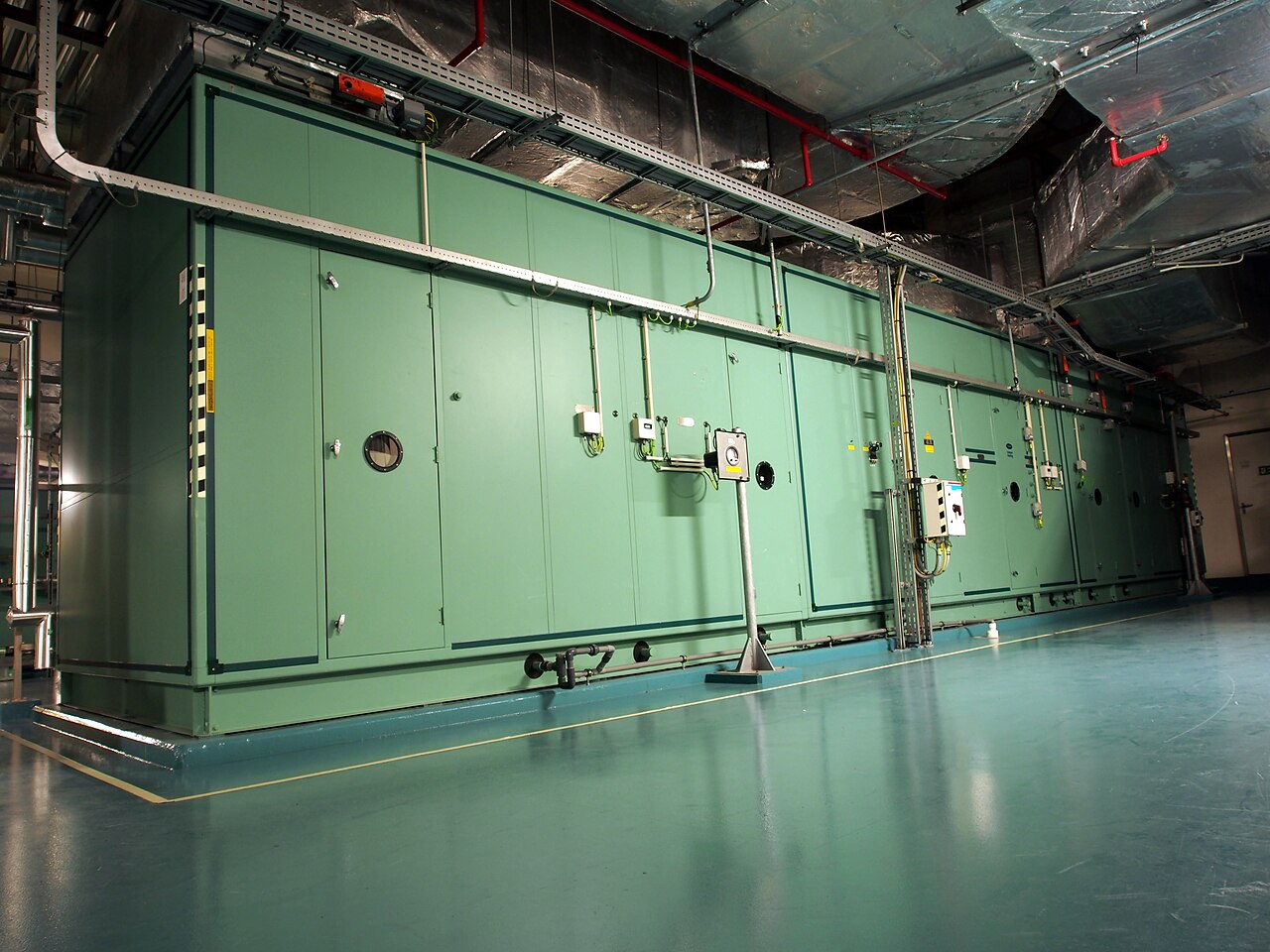
Your air handler — the indoor part of your AC, usually in a closet, garage, or attic — pulls a surprising amount of water out of the air. On a humid South Florida day, a typical home system can remove several gallons of moisture. That water is supposed to drip into a pan and flow out through a drain line. When something in that path fails, it ends up on your floor, in your ceiling, or inside your walls.
First step: if you see water, turn the system off at the thermostat and soak up what you can. Water near electrical components or soaking into drywall gets expensive fast. Then work through the causes below.
Clogged Condensate Drain Line
This is the number-one cause of air handler leaks in South Florida. Our warm, humid climate is perfect for algae and slime to grow inside the PVC drain line. Over a few months it builds up until water can't get out — and the drain pan overflows.
Find the drain line access (usually a small capped PVC tee near the air handler). Pour in a cup of distilled white vinegar every 1–3 months to keep algae down. If the line is already clogged, a wet/dry vacuum on the outdoor end of the drain can often pull the clog out.
Tripped or Missing Float Switch
Most systems have a float (safety) switch in the drain pan or drain line. When water backs up, the float rises and shuts the AC off before it overflows. If your AC suddenly stopped cooling and there's water in the pan, the float switch did its job — the real problem is the clog behind it.
If there's no float switch, or it's stuck or mis-wired, water simply overflows. A technician can install or test one — it's an inexpensive part that can save you thousands in water damage.
Frozen Evaporator Coil
When airflow drops or refrigerant is low, the indoor coil can freeze into a block of ice. When the system cycles off, that ice melts all at once — more water than the pan and drain can handle.
Check your air filter first: a dirty filter is the most common reason a coil freezes. Turn the system off (leave the fan on 'On' to speed thawing) and let the ice melt completely before restarting. If it freezes again with a clean filter, the cause is likely low refrigerant — call a pro.
Cracked or Rusted Drain Pan
Older air handlers — especially those 10–15 years old — often have metal drain pans that rust through. Even plastic pans can crack with age and heat. Water then drips straight through instead of reaching the drain.
Look under the unit with a flashlight. If the pan is rusted, cracked, or you see water marks below it, the pan needs to be repaired or replaced. A secondary (emergency) pan under the unit is also a smart, low-cost upgrade.
Disconnected or Poorly Sloped Drain Line
Drain lines can come loose at a fitting, get bumped during other work, or be installed without enough downhill slope. Water then sits in the line, leaks at a joint, or drains back toward the unit.
If you see water dripping from a pipe joint rather than the pan, or the leak started right after other work was done in the closet or attic, a technician should re-secure and re-slope the line.
The bottom line
Most air handler leaks come down to one thing: water that can't get out. Keep your drain line clean with vinegar every few months, change your filter regularly, and make sure you have a working float switch.
Don't ignore a small leak. Water from an air handler can rot subfloors, stain ceilings, and grow mold inside walls long before you see it. A drain cleaning and safety check is a quick, affordable visit.